Florida Memory is administered by the Florida Department of State, Division of Library and Information Services, Bureau of Archives and Records Management. The digitized records on Florida Memory come from the collections of the State Archives of Florida and the special collections of the State Library of Florida.

DLIS Logo
State Archives of Florida
  • ArchivesFlorida.com
  • State Archives Online Catalog
  • ArchivesFlorida.com
  • ArchivesFlorida.com
State Library of Florida
  • Library.Florida.gov
  • State Library Online Catalog
Related Sites
  • Division of Library and Information Services
  • Florida Electronic Library
  • Museum of Florida History
  • Florida Department of State
  • Division of Library and Information Services
  • State Archives of Florida
  • Listen: The Folk Program
Florida Memory Logo Florida Memory Logo
  • Discover
    • Photographs
      Photographs
      • About the Florida Photographic Collection
      • Photo Collections
      • Share Your Knowledge
      • Disclaimer and Copyright
    • Historical Records
      Historical Records
      • Voter Registration Rolls, 1867-68
        Reconstruction era voting records
      • Early Auto Registrations, 1905-1917
        Florida's first automobile registrations
      • Florida's Historic Constitutions
        Milestones in Florida's political framework
      • Selected Documents
        Letters, ephemera and other historical records
      • Florida Governors' Records
        Documenting Florida's chief executive officers
      • VIEW ALL
    • Maps
      Maps
      • Browse by Geographic Scope
      • Browse by Coverage
      • Browse by Image
      • Browse by Format
      • Browse by Subject
    • Audio
      Audio
      • Florida Folklife Program Recordings
      • Florida Folk Festival Recordings
      • WPA Recordings
      • Selected Audio
      • Florida Memory Radio
    • Video
  • Learn
    • About Florida Memory
      About Florida Memory
      • Founding and Mission
      • What We Select
      • Digitization Guidelines
      • Harmful Content Statement
      • Disclaimer and Copyright
      • Partnerships
    • Classroom
      Classroom
      • Learning Units
      • Primary Source Sets
      • Florida History Day
      • History Months
      • Projects
    • Floridiana Articles
    • Exhibits
      Exhibits
      • Significant Documents
      • Florida in World War I
      • Florida in World War II
      • Florida Maps: Then & Now
      • Florida Folklife Collection
      • The Koreshan Unity
      • Daguerreotype to Digital
      • Timeline
      • Photo Exhibits
      • VIEW ALL
    • Research Tools
      Research Tools
      • Guide to Florida Governors and the Florida Cabinet
      • Guide to Civil War Records
      • Guide to Black History Collections
      • Guide to Women's History Records
      • Guide to New Deal Records
      • Guide to the Koreshan Unity Papers
      • Guide to Genealogical Research
      • Guide to Florida Films
      • VIEW ALL
  • Share
    • Order
    • Connect With Us
    • Donate Records
  • Accessibility Menu
    ×
    Change Background Color
    • Default
    • Dark Contrast
    • Desaturate
    • Invert
    Change Font-Size
    • Default
    • Large
    Change Font
    • Muli
    • Open-Dyslexic
    Cursor
    • Default
    • Large
    • Reading Guide
    Highlight Links
    • On
    • Off

Shopping Cart

View Cart Checkout
Home Learn Classroom Primary Source Sets Hurricanes and the Great Depression

Primary Source Set
Hurricanes and the Great Depression

Three of Florida's strongest historic hurricanes struck the state in the early 20th century. The practice of naming hurricanes did not begin until the 1950s, so these three hurricanes are known today as the Great Miami Hurricane of 1926, the Okeechobee Hurricane of 1928, and the 1935 Labor Day Hurricane.

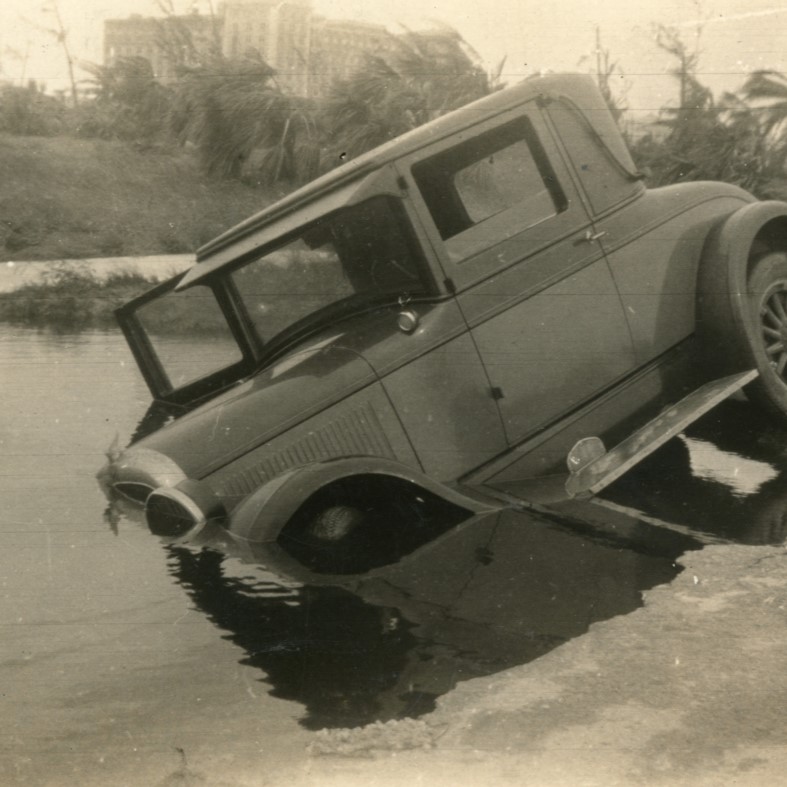
The Great Miami Hurricane of 1926 made landfall on Saturday, September 18, 1926, around 2 a.m. Most Floridians had no idea a storm that would now be classified as a Category 4 hurricane was coming. After arriving in the United States, the hurricane caused between $100 and $105 million dollars in damages. Thousands were injured, and in October 1926 the Red Cross reported 372 people had died in the U.S. Many more were missing and presumed dead, and over 40,000 people were left homeless.

Exactly two years later, another powerful hurricane swept through the state. On September 17, 1928, the Okeechobee Hurricane (also known as the San Felipe Segundo Hurricane) made landfall as a modern Category 4 hurricane. Between the Caribbean and the United States, more than 4,000 people died; most of the victims were Black migrant workers around Lake Okeechobee.

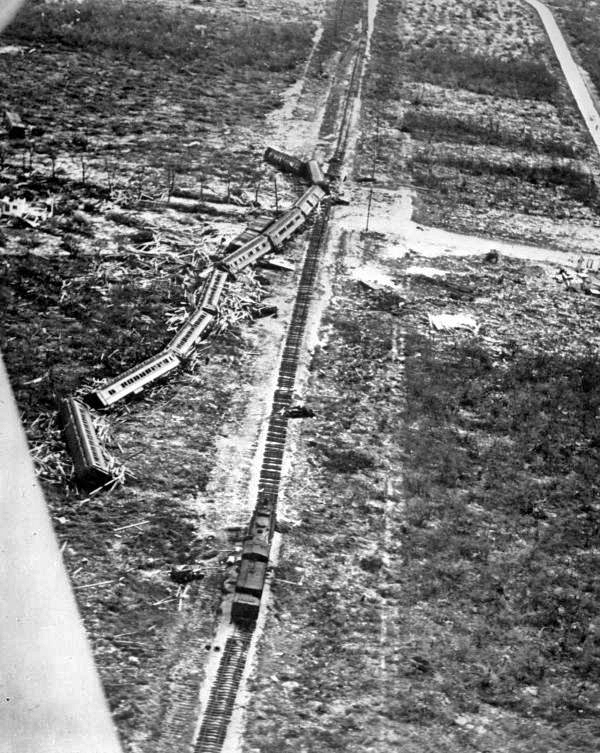
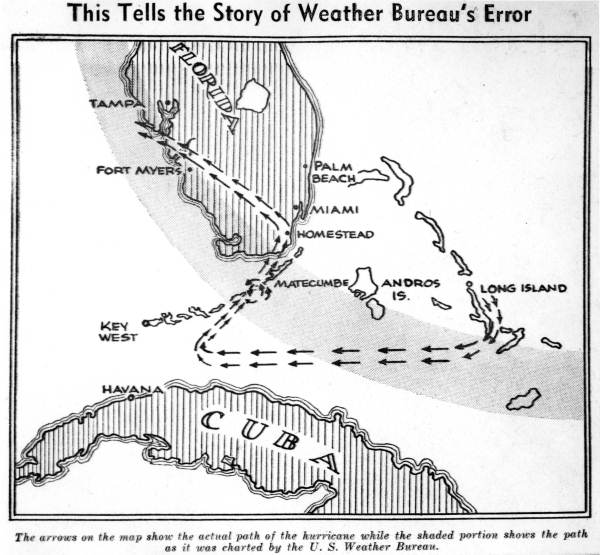
While the 1926 and 1928 hurricanes came with little warning to Floridians, the 1935 Labor Day Hurricane was somewhat more expected. Despite this, the storm was devastating. The Weather Bureau issued the first storm advisory on August 31, 1935, and upgraded their warnings to hurricane level by September 1. Yet, for many in the Florida Keys, the warnings came too late for them to evacuate. The hurricane made landfall September 2 with sustained winds of up to 185 mph, which would earn it the label of a Category 5 storm today. Over 400 people died, many of them World War I veterans working on the Overseas Highway as part of a federal relief project.

Powerful storms continued to terrorize Florida residents during the Great Depression, but they were not as extreme. The 1929 Bahamas Hurricane first struck the Bahamas on September 25, 1929, before arriving in the Florida Keys on September 28. Even though it had weakened considerably by the time it reached Florida, it was a slow storm and brought heavy rainfall and flooding to Hialeah, Homestead, Miami, and other areas south of Miami.

Between 1926 and 1939, at least 69 hurricanes formed in the Atlantic. Sixteen of these storms directly impacted Florida. The Great Miami Hurricane marked the end of the Florida land boom of the Roaring '20s and the beginning of a depression that would soon affect the rest of the country. Any hopes of recovering the boom vanished when the Okeechobee Hurricane made landfall. By the time the Labor Day Hurricane struck, the Great Depression had taken hold.

Photo credit: Car blown into damaged road during the 1926 hurricane in Miami Beach.

(State Archives of Florida)


Show full overview

Documents

Shape Note Music:

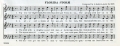
Shape Note Music: "Florida Storm" by Judge Jackson, 1928

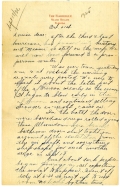
Letter from Kaye to Louise Webber Regarding the Great Miami Hurricane, 1926

Letter from Kaye to Louise Webber Regarding the Great Miami Hurricane, 1926

Letter from Delia Curry to Governor David Sholtz Regarding Storm Damage, 1935

Letter from Delia Curry to Governor David Sholtz Regarding Storm Damage, 1935

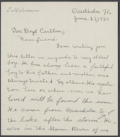
Letter from Mabel Ruth Mixon to Governor Doyle E. Carlton, 1930

Letter from Mabel Ruth Mixon to Governor Doyle E. Carlton, 1930

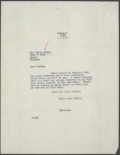
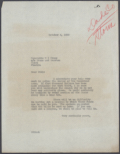
Correspondence Between W. I. Evans and Governor Doyle E. Carlton Regarding Storm Damage in Homestead, Florida, 1929

Correspondence Between W. I. Evans and Governor Doyle E. Carlton Regarding Storm Damage in Homestead, Florida, 1929

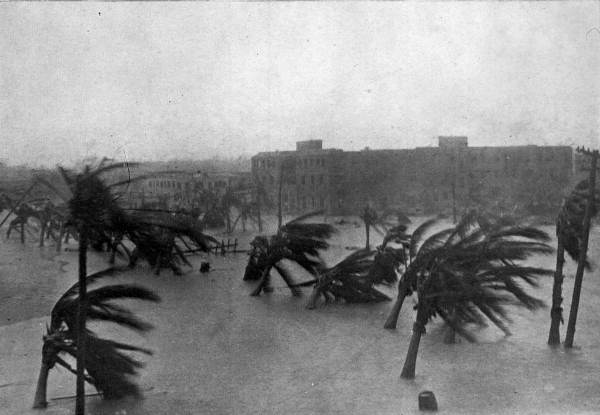
Hurricane action shot in Miami Beach, Florida.

Hurricane action shot in Miami Beach, Florida.

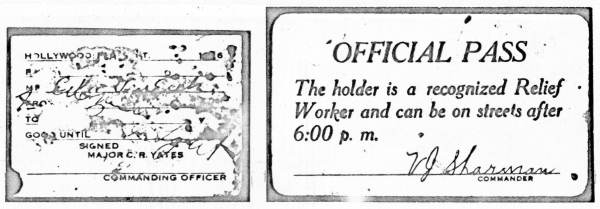
Official pass used by relief workers, after the 1926 hurricane - Hollywood, Florida

Official pass used by relief workers, after the 1926 hurricane - Hollywood, Florida

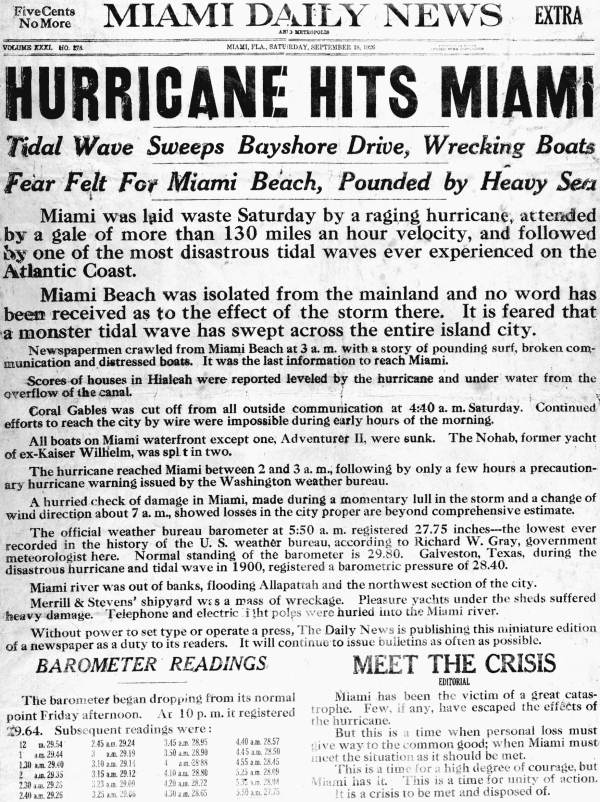
Miami Daily News headline about the hurricane.

Miami Daily News headline about the hurricane.

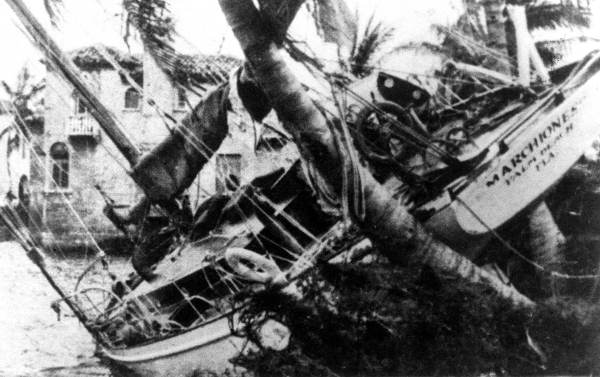
Vessel blown up on shore : West Palm Beach, Florida.

Vessel blown up on shore : West Palm Beach, Florida.

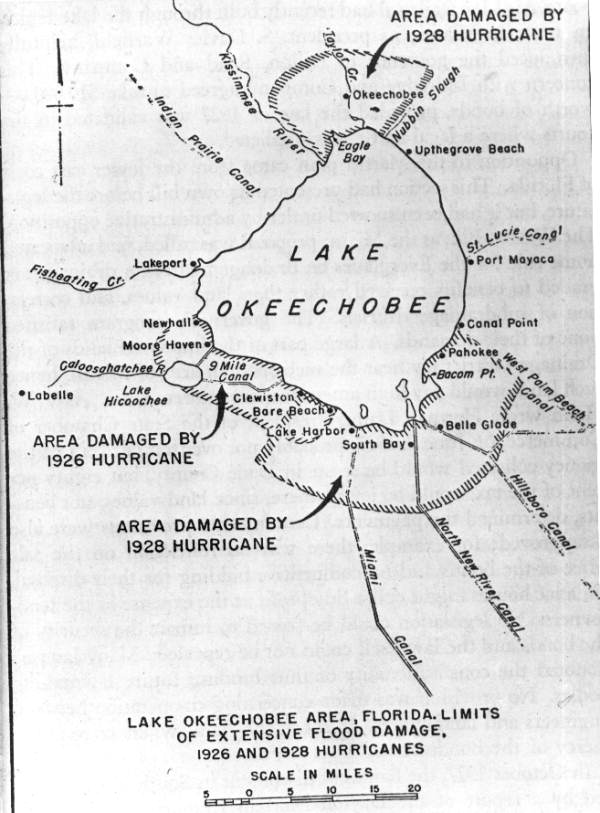
Map showing flood damage to the Lake Okeechobee area by the hurricanes of 1926 and 1928

Map showing flood damage to the Lake Okeechobee area by the hurricanes of 1926 and 1928

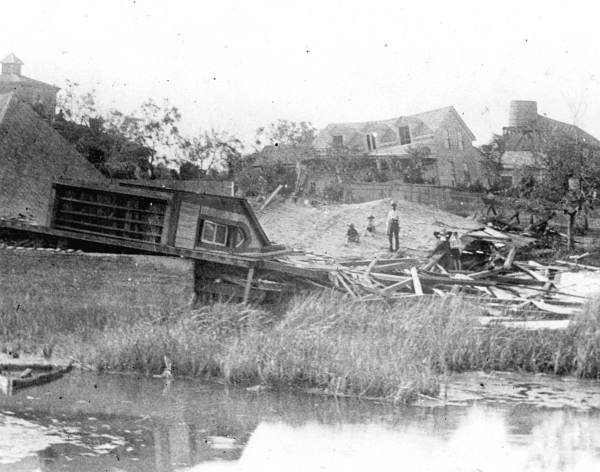
View of residence remains after the 1935 Labor Day hurricane - Cedar Key, Florida.

View of residence remains after the 1935 Labor Day hurricane - Cedar Key, Florida.

Rescue train swept off the tracks by the 1935 Labor Day hurricane

Rescue train swept off the tracks by the 1935 Labor Day hurricane

Map showing projected and actual storm path

Map showing projected and actual storm path

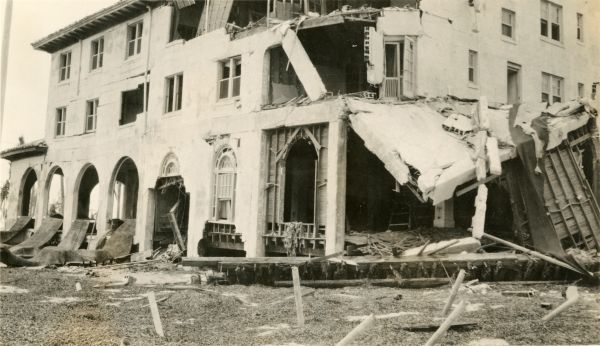
Close-up view showing hurricane damage to the Pancoast Hotel on Collins Avenue in Miami Beach.

Close-up view showing hurricane damage to the Pancoast Hotel on Collins Avenue in Miami Beach.

  • Research Starter
  • Teacher's Guide

Florida Photographic Collection

  • Photos of the 1935 hurricane
  • Photos of the 1928 hurricane
  • Photos of the 1926 hurricane

Additional Primary Sources

  • Munroe, Jessie Wirth. Letter to Susie Wirth. 24 September 1926. ASM0015, Ralph M. Munroe Family Papers, University of Miami Libraries Digital Collections, Miami, FL. https://cdm17191.contentdm.oclc.org/digital/collection/asm0015/id/3979/rec/6
  • Hemingway, Ernest. "Who Murdered the Vets?: A First-Hand Report on the Florida Hurricane." New Masses, September 17, 1935. https://www.monthlyreview.org/mrzine/files/ErnestHemingwayWhoMurderedtheVets.pdf.
  • Florida Hurricane September 17-18, 1926 Album, Finlay B. Matheson Collection, University of Miami Libraries Digital Collections, Miami, FL. https://digitalcollections.library.miami.edu/digital/collection/asm0216/id/4940

Published Secondary Sources

  • Barnes, Jay. Florida's Hurricane History. Chapel Hill: UNC Press Books, 2012.
  • NWS Melbourne, and NWS Miami. "The 1928 Okeechobee Hurricane (September 6-21, 1928)." ArcGIS StoryMaps. Last modified September 18, 2023. https://arcg.is/jj5eb.
  • "The Devastating 1926 Hurricane that Halted the Growth of Miami." America in Color: The 1920s. Smithsonian Channel, June 30, 2017. https://www.si.edu/es/object/yt_LRAJ7Bc0O5E.

Guiding Questions

  • How did the 1926 and 1928 hurricanes contribute to the end of Florida’s land boom?
  • In what ways did the hurricanes of the Great Depression affect the other challenges Floridians faced during that time period?
  • How did the hurricanes of the Great Depression influence the ways agencies like the U.S. Weather Bureau respond to extreme weather events?

Next Generation Sunshine State Standards

  • SS.4.A.7.1: Describe the causes and effects of the 1920’s Florida land boom and bust. Examples may include, but are not limited to, land speculation.
  • SS.4.A.7.2: Summarize challenges Floridians faced during the Great Depression. Examples may include, but are not limited to, the Labor Day hurricane of 1935 and the Mediterranean fruit fly.
  • SS.4.G.1.3: Explain how weather impacts Florida. Examples are hurricanes, thunderstorms, drought, mild climate.
  • SC.6.E.7.7: Investigate how natural disasters have affected human life in Florida.

Document Analysis Worksheets from the National Archives

Document analysis is the first step in working with primary sources. Teach your students to think through primary source documents for contextual understanding and to extract information to make informed judgments. The document analysis worksheets created by the National Archives and Records Administration are in the public domain.

State Seal of Florida
Division of Library and Information Services logo

Florida Memory is a digital outreach program providing free online access to select archival records from collections housed in the State Library and Archives of Florida. Florida Memory digitizes materials that illuminate the state's history and culture.

  • Florida Department of State
  • Division of Library & Information Services
  • State Archives of Florida
  • Additional Links

    About Us Connect With Us Disclaimer Harmful Content Statement State Archives Online Catalog State Library Online Catalog Ask A Librarian Accessibility Statement

    Follow Us

    Florida Memory is funded under the provisions of the Library Services and Technology Act from the Institute of Museum and Library Services. Florida's LSTA program is administered by the Department of State's Division of Library and Information Services.

    For FY2025-26, the percentage of total costs for the Florida Memory program financed with federal money is 66%; the federal dollar amount to be spent on the program is $1,027,650. This program does not receive any non-governmental funding.

    IMLS