Florida Memory is administered by the Florida Department of State, Division of Library and Information Services, Bureau of Archives and Records Management. The digitized records on Florida Memory come from the collections of the State Archives of Florida and the special collections of the State Library of Florida.

State Archives of Florida
- ArchivesFlorida.com
- State Archives Online Catalog
- ArchivesFlorida.com
- ArchivesFlorida.com
State Library of Florida
Related Sites
 Listen: The FolkFolk Program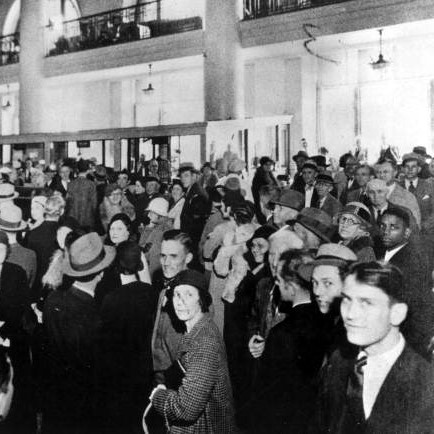
Primary Source Set
Bank Failures and the Great Depression
Florida's 1926 banking panic marked the official beginning of a devastating economic downturn for the Sunshine State. The land boom of the 1920s had brought millions of dollars into Florida. As developers poured money into the state, the banking system grew to match. By 1925, Florida was home to 57 national banks and 271 state banks and trust companies. Between the national and state banks, the state had around $875 million in deposits, which was almost five times more than the total number of deposits three years earlier in 1922.
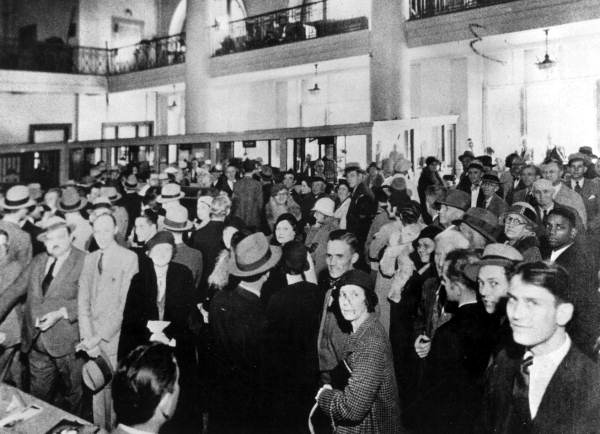
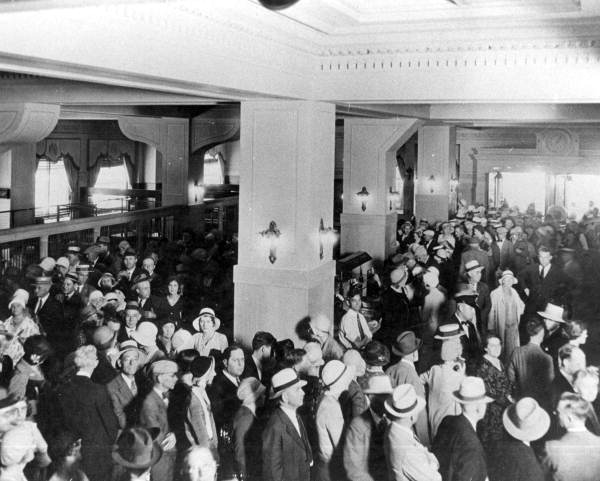
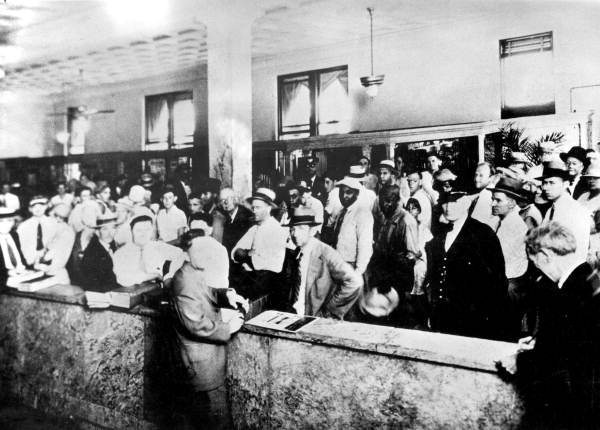
A bank does not keep all of its money in its vaults. Typically, "money in the bank" refers to a combination of cash, investments, and the value of the loans the bank has made. When a lot of people lose confidence in a bank and rush to withdraw their money, they start a bank run. They might hear rumors that the bank is going to close or that a nearby bank failed and become concerned about their own deposits. During a bank run, the bank does not have enough cash on hand to pay everyone back, and so the bank fails.
Historians have argued Florida's banks were mismanaged, poorly regulated, and undercapitalized, which means they did not have enough money to operate properly. Many bankers and government officials were also accused of being corrupt, including Florida's comptroller Ernest Amos whose job involved managing the financial activities in the state.
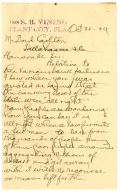
Between January 1, 1925, and July 1, 1930, 18 national banks and 184 state banks closed in Florida. Many closed banks eventually reopened. Sometimes banks would close to protect their customers' deposits during a bank run before the bank could fail. By the time Wall Street crashed in 1929, many Floridians were already struggling financially. The earlier bank failures had only been a sign of the challenging times ahead.
Photo credit: A bank run - Orlando, Florida.
Show full overview