Florida Memory is administered by the Florida Department of State, Division of Library and Information Services, Bureau of Archives and Records Management. The digitized records on Florida Memory come from the collections of the State Archives of Florida and the special collections of the State Library of Florida.

DLIS Logo
State Archives of Florida
  • ArchivesFlorida.com
  • State Archives Online Catalog
  • ArchivesFlorida.com
  • ArchivesFlorida.com
State Library of Florida
  • Library.Florida.gov
  • State Library Online Catalog
Related Sites
  • Division of Library and Information Services
  • Florida Electronic Library
  • Museum of Florida History
  • Florida Department of State
  • Division of Library and Information Services
  • State Archives of Florida
  • Listen: The Assorted Selections Program
Florida Memory Logo Florida Memory Logo
  • Discover
    • Photographs
      Photographs
      • About the Florida Photographic Collection
      • Photo Collections
      • Share Your Knowledge
      • Disclaimer and Copyright
    • Historical Records
      Historical Records
      • Voter Registration Rolls, 1867-68
        Reconstruction era voting records
      • Early Auto Registrations, 1905-1917
        Florida's first automobile registrations
      • Florida's Historic Constitutions
        Milestones in Florida's political framework
      • Selected Documents
        Letters, ephemera and other historical records
      • Florida Governors' Records
        Documenting Florida's chief executive officers
      • VIEW ALL
    • Maps
      Maps
      • Browse by Geographic Scope
      • Browse by Coverage
      • Browse by Image
      • Browse by Format
      • Browse by Subject
    • Audio
      Audio
      • Florida Folklife Program Recordings
      • Florida Folk Festival Recordings
      • WPA Recordings
      • Selected Audio
      • Florida Memory Radio
    • Video
  • Learn
    • About Florida Memory
      About Florida Memory
      • Founding and Mission
      • What We Select
      • Digitization Guidelines
      • Harmful Content Statement
      • Disclaimer and Copyright
      • Partnerships
    • Classroom
      Classroom
      • Learning Units
      • Primary Source Sets
      • Florida History Day
      • History Months
      • Projects
    • Floridiana Articles
    • Exhibits
      Exhibits
      • Significant Documents
      • Florida in World War I
      • Florida in World War II
      • Florida Maps: Then & Now
      • Florida Folklife Collection
      • The Koreshan Unity
      • Daguerreotype to Digital
      • Timeline
      • Photo Exhibits
      • VIEW ALL
    • Research Tools
      Research Tools
      • Guide to Florida Governors and the Florida Cabinet
      • Guide to Civil War Records
      • Guide to Black History Collections
      • Guide to Women's History Records
      • Guide to New Deal Records
      • Guide to the Koreshan Unity Papers
      • Guide to Genealogical Research
      • Guide to Florida Films
      • VIEW ALL
  • Share
    • Order
    • Connect With Us
    • Donate Records
  • Accessibility Menu
    ×
    Change Background Color
    • Default
    • Dark Contrast
    • Desaturate
    • Invert
    Change Font-Size
    • Default
    • Large
    Change Font
    • Muli
    • Open-Dyslexic
    Cursor
    • Default
    • Large
    • Reading Guide
    Highlight Links
    • On
    • Off

Shopping Cart

View Cart Checkout
Home Learn Exhibits Daguerreotype to Digital Cyanotype Photography

  • Daguerreotype to Digital
  • Daguerreotypes
  • Wet Collodion Photography
  • Albumen Prints
  • Tintypes
  • Cyanotype Photography
  • Glass Plate Negatives
  • Nitrate and Acetate Film
  • Color Photography
  • Motion Picture Film
  • Instant Photography
  • Digital Photography

Cyanotype Photography

  • Cyanotypes prints are recognizable for their bright blue color.
  • Cyanotypes are easy to create compared to other photographic processes, so they were popular with both amateur and professional photographers in the early 20th century.
  • Engineers and architects used the cyanotype process to make blueprints.

History
Cyanotypes were invented in 1842 by astronomer and chemist John Herschel, making them among the oldest photographic technologies. However, cyanotypes on their own had some drawbacks. The process did not capture fine details as well as other methods and notably, its products were always bright blue in color. Cyanotypes found popularity in the 1880s as a cheap way for photographers to proof glass plate negatives and decide which to print out using a higher quality method.

Cyanotypes remained popular into the 20th century among amateur photographers because they were easy to work with. They could be made with little more than sunshine and rainwater, lowering the bar on the effort required to photograph, leading to less formal subjects for photographs like friends and pets. Cyanotype printing was also commonly used by engineers and architects to easily make copies of plans they had drawn, which they called “blueprints.

Did You Know?
Cyanotypes can also be used to make photograms, where a partially or fully opaque material, such as a plant or lace, is placed directly on top of sensitized paper and exposed together to make a silhouette. This method was used by botanist Anna Atkins to create her reference book, British Algae: Scientific Impressions (1843). Her book, full of direct photograms of plant specimens, was the first self-published book with camera-less photographic illustrations. She learned the cyanotype method directly from Herschel, who was a family friend.

Bridge family dogs in Dade City, ca. 1920. (State Archives of Florida)
Documents

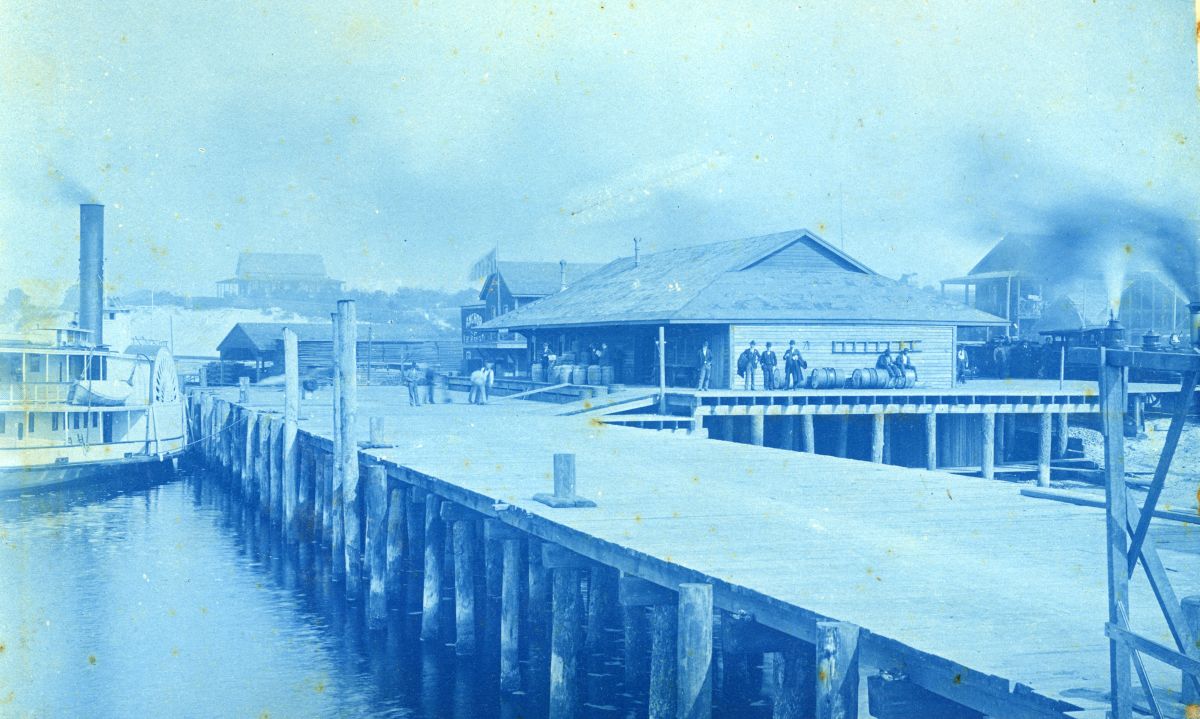
Barrels being moved between steamboat and building at dock in Carrabelle, Florida, February 1899

Barrels being moved between steamboat and building at dock in Carrabelle, Florida, February 1899

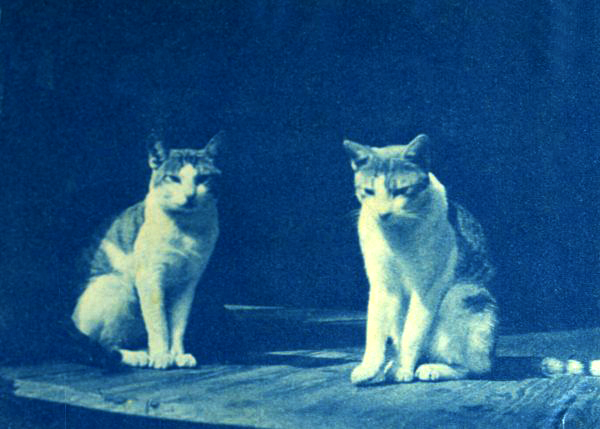
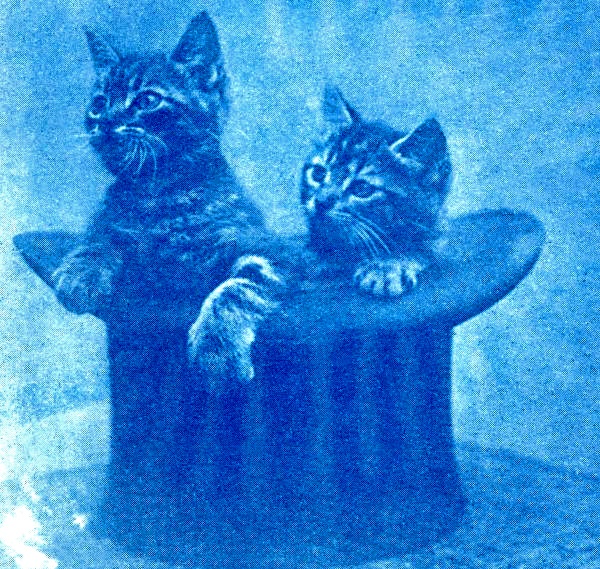
Bridge family cats in Dade City, ca. 1920

Bridge family cats in Dade City, ca. 1920

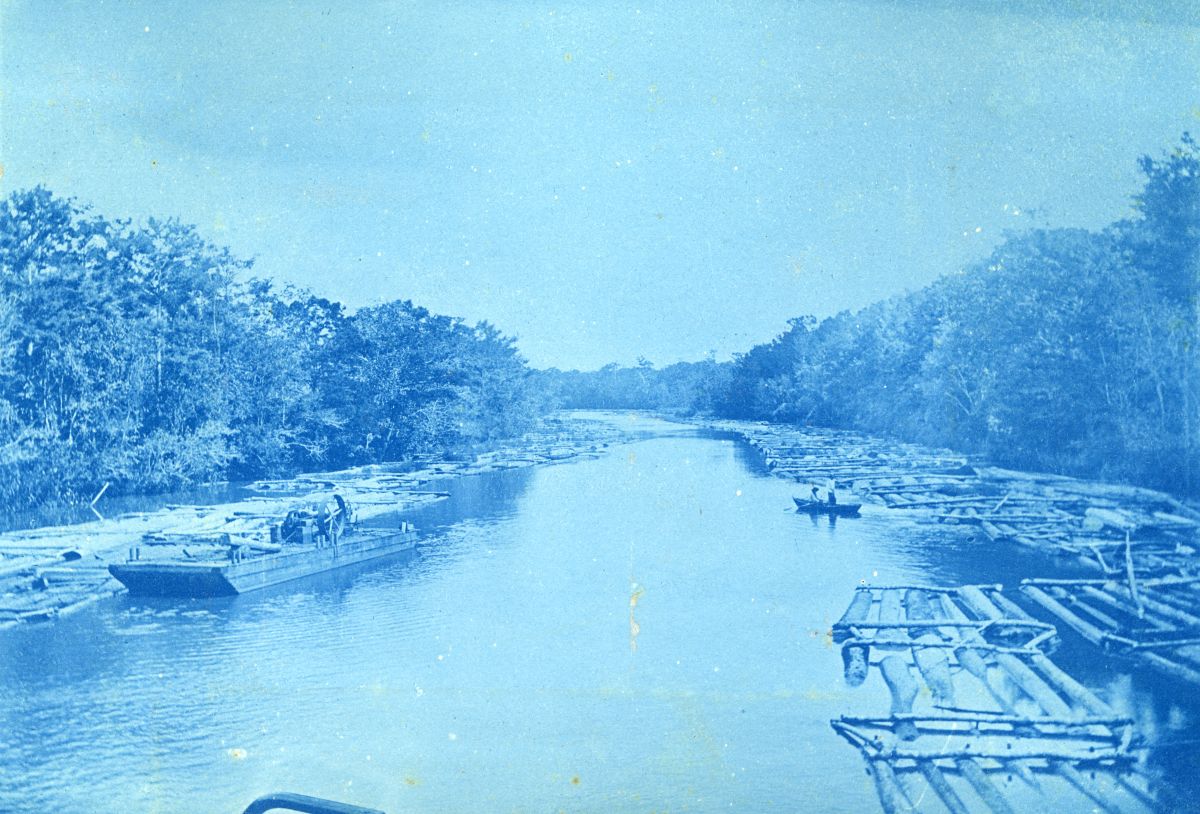
Log rafts being transported along river at Apalachicola, Florida, February 1899

Log rafts being transported along river at Apalachicola, Florida, February 1899

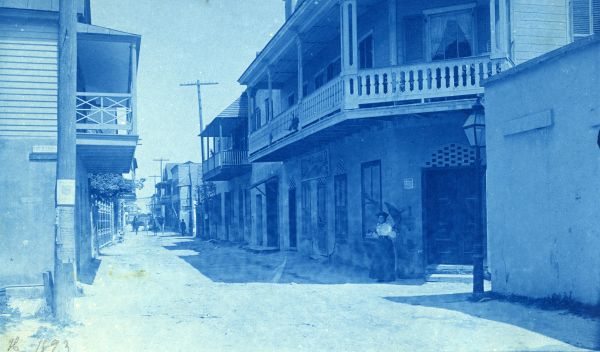
Street scene in St. Augustine, April 1893

Street scene in St. Augustine, April 1893

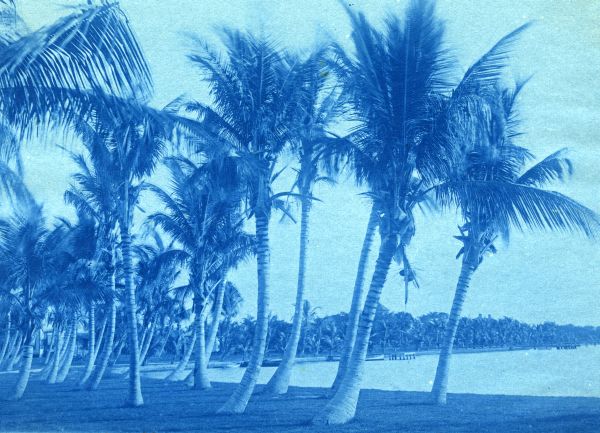
Palm trees in Lake Worth, 1896

Palm trees in Lake Worth, 1896

Kittens in a top hat in Dade City, ca. 1920

Kittens in a top hat in Dade City, ca. 1920

State Seal of Florida
Division of Library and Information Services logo

Florida Memory is a digital outreach program providing free online access to select archival records from collections housed in the State Library and Archives of Florida. Florida Memory digitizes materials that illuminate the state's history and culture.

  • Florida Department of State
  • Division of Library & Information Services
  • State Archives of Florida
  • Additional Links

    About Us Connect With Us Disclaimer Harmful Content Statement State Archives Online Catalog State Library Online Catalog Ask A Librarian Accessibility Statement

    Follow Us

    Florida Memory is funded under the provisions of the Library Services and Technology Act from the Institute of Museum and Library Services. Florida's LSTA program is administered by the Department of State's Division of Library and Information Services.

    For FY2025-26, the percentage of total costs for the Florida Memory program financed with federal money is 66%; the federal dollar amount to be spent on the program is $1,027,650. This program does not receive any non-governmental funding.

    IMLS